Laozi
According to the Shiji, Laozi was named Li Er, with the courtesy name Dan, and came from Ku county in the state of Chu. He served as an archivist at the Zhou court. Sima Qian already noted that accounts of Laozi's identity differed, and his dates are unknown. Tradition places him in the Spring and Autumn period, a little older than Confucius, but modern scholars still dispute this. Legend says he left the west through Hangu Pass and wrote the Tao Te Ching at the request of the gatekeeper Yin Xi. Taoism honors him as a founding figure and deified him as Taishang Laojun. The Tang imperial house, who shared his surname Li, claimed him as an ancestor and honored him highly.
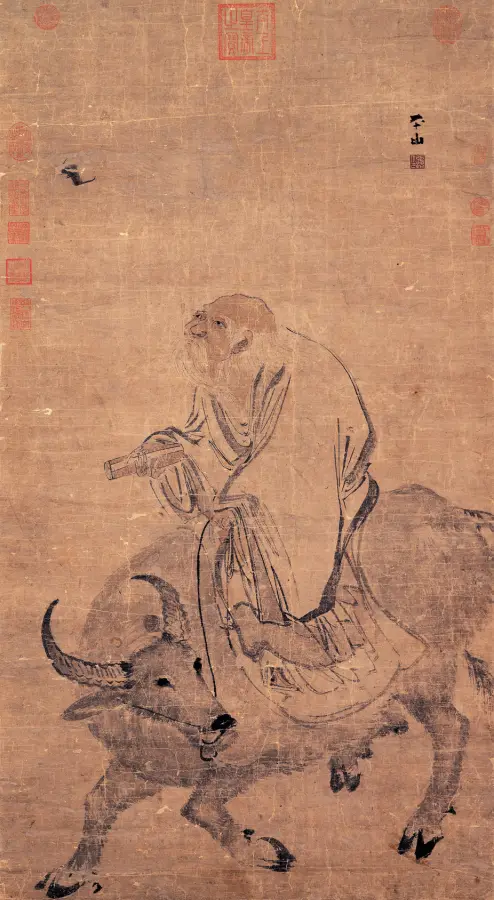
Zhuangzi
Zhuangzi, named Zhou, came from Meng in the state of Song during the Warring States period. He is commonly dated to about 369 to 286 BCE, though scholars differ on the exact years. The Shiji says he once served as a minor official at a lacquer garden, lived simply, and declined an offer of high office from the king of Chu. He developed Laozi's ideas, stressing free wandering, the equality of things and living in accord with nature. He expressed them through parables and imagination, and his influence on Chinese philosophy, literature and art has been profound. Of the Zhuangzi, the Inner chapters are generally thought to reflect his own thought most closely.
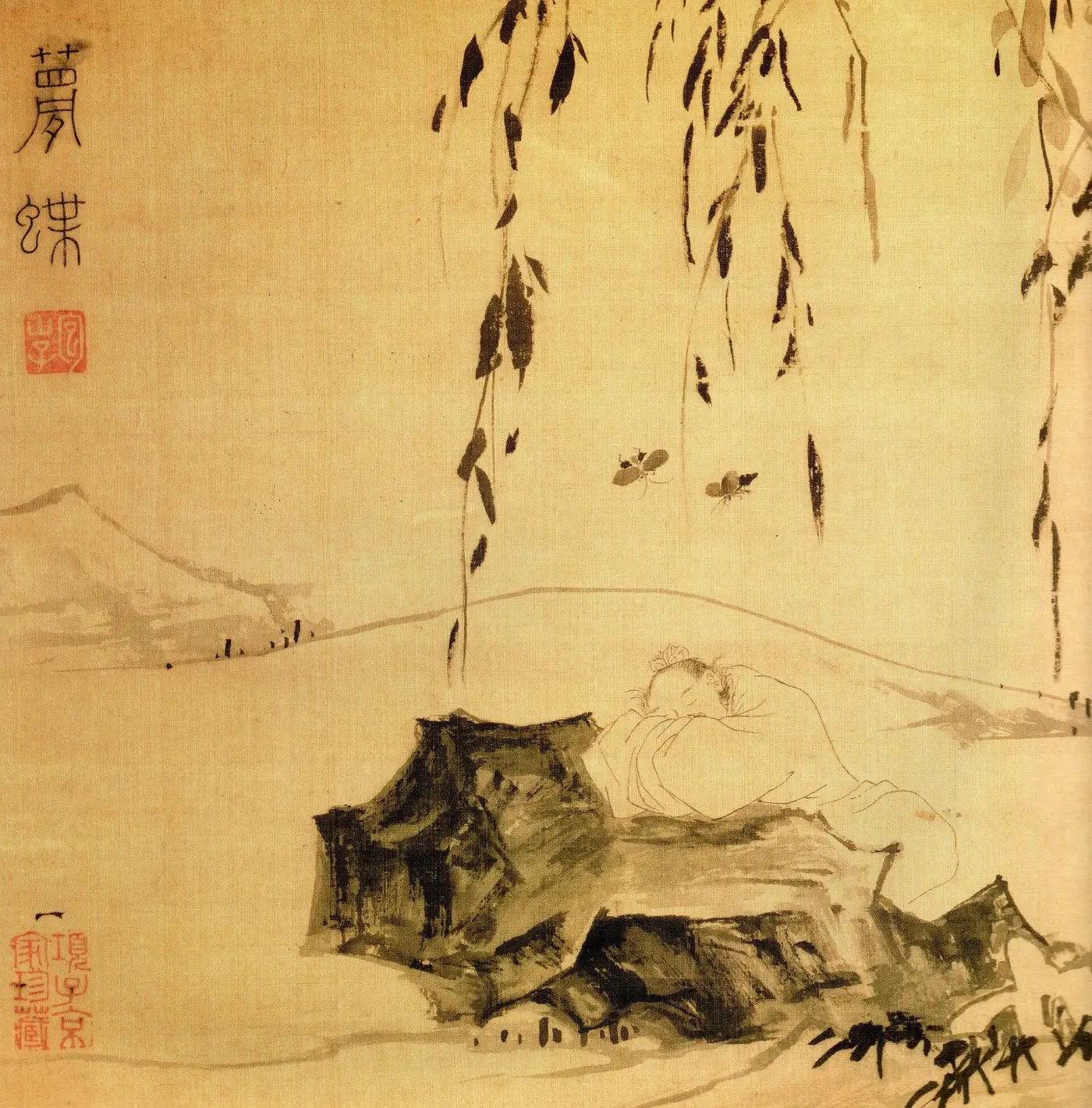
Zhang Daoling
Zhang Daoling, also called Zhang Ling, is traditionally dated 34 to 156 CE, though these dates come mainly from Taoist tradition and the historical records are brief. He is said to have gone to Shu (modern Sichuan) during the Eastern Han and founded the Way of the Celestial Masters at Mount Heming. Because followers were asked to contribute five pecks of rice, the movement was also called the Way of the Five Pecks of Rice. Later generations honored him as the first Celestial Master, and his descendants inherited the title, forming what became the Zhengyi tradition, one of the most important lines of transmission in Taoism.
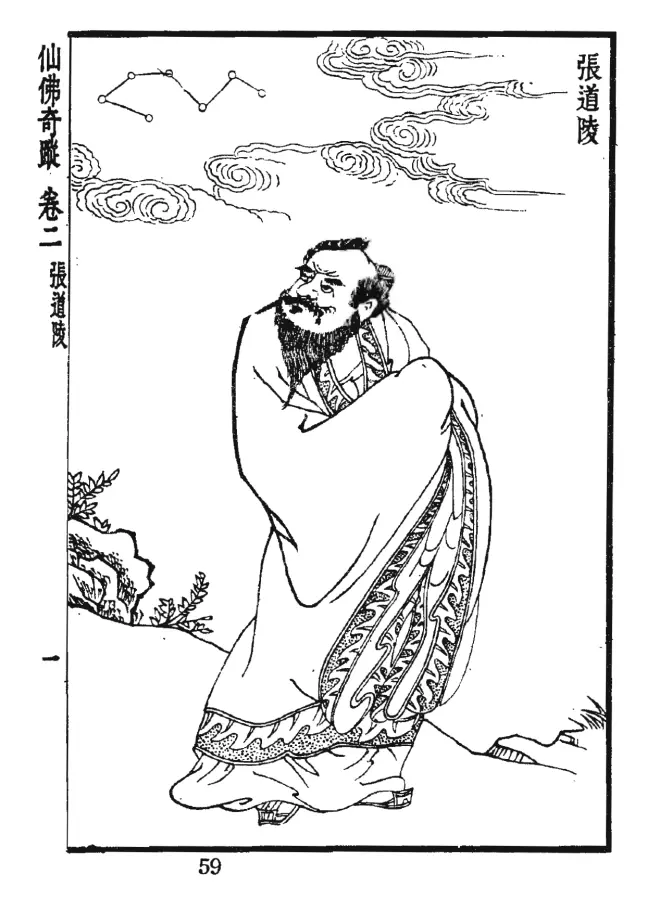
Ge Hong
Ge Hong, courtesy name Zhichuan and known as Baopuzi, came from Jurong in Danyang in the Eastern Jin. He lived from about 283 to 343 CE, though sources vary slightly. Born into a gentry family and widely read, he was a Taoist thinker, alchemist and medical writer. The Inner Chapters of his Baopuzi discuss immortality, remedies, self-cultivation and alchemy, while the Outer Chapters deal with government and society. His Zhouhou beiji fang collects many simple, practical remedies and influenced later medical writing.
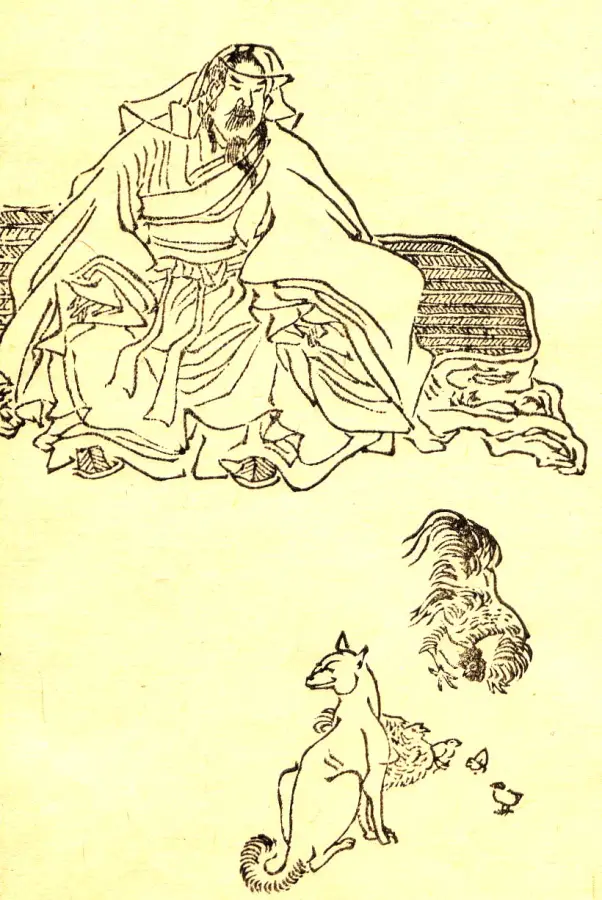
Tao Hongjing
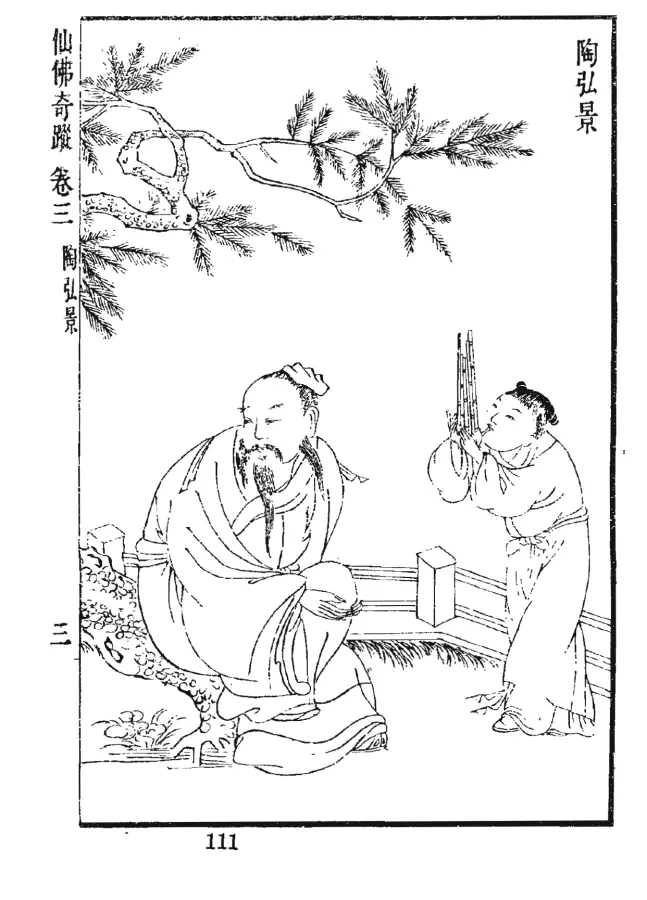
Tao Hongjing, courtesy name Tongming, lived from 456 to 536 CE in the Southern Dynasties. He retired to Mount Mao and became a key figure in the Shangqing tradition. He compiled the Zhen'gao (Declarations of the Perfected), recording the transmission of Shangqing revelations, and also wrote the Dengzhen yinjue. He was learned in medicine too, and his Bencao jing jizhu organized and annotated the older Shennong herbal. Emperor Wu of Liang often sought his advice on state matters, and he came to be called the 'Prime Minister in the Mountains'.
Lü Dongbin
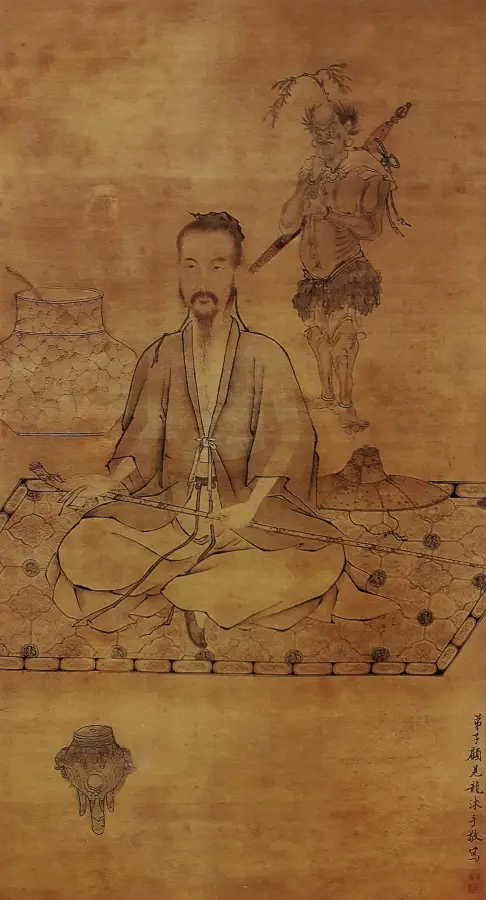
Lü Dongbin, also known as Chunyangzi, is one of the best-loved immortals in both folk belief and Taoism, and a member of the Eight Immortals. Reliable historical records about his life are almost nonexistent. Tradition places him in the Tang and often gives 798 as his birth year, but this belongs to legend and should not be taken as established fact. From the Song onward, stories, poems and tales about him multiplied, and the Quanzhen school of the Jin and Yuan honored him as one of the 'Five Northern Patriarchs', while inner-alchemy lineages also claimed him. He is therefore mainly a figure of legend and devotion rather than a historically verifiable person.
Qiu Chuji
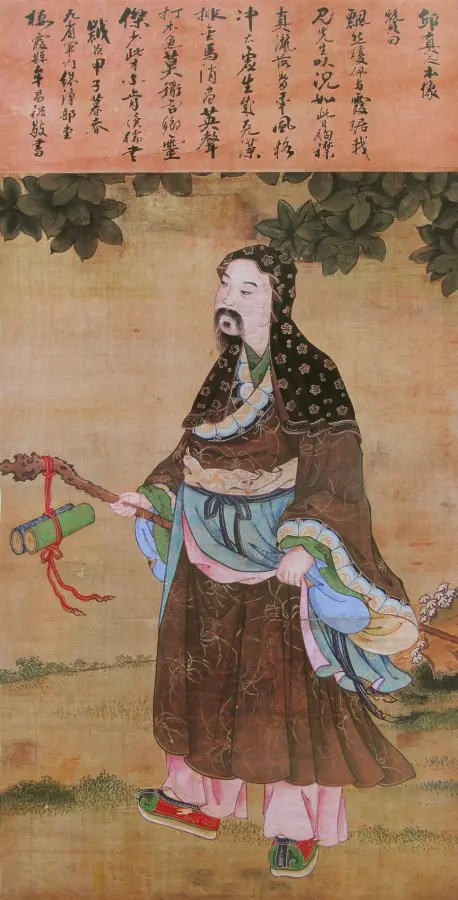
Qiu Chuji, courtesy name Tongmi and known as Changchunzi, came from Qixia in Dengzhou, in modern Shandong, and lived from 1148 to 1227. A disciple of Wang Chongyang and one of the Seven Masters of Quanzhen, he later became the school's leader. In 1220, at an advanced age, he traveled west at the summons of Genghis Khan. He met the Khan in 1222 and urged him to revere Heaven, care for his people and avoid killing. His disciple Li Zhichang recorded the journey in Changchun zhenren xiyou ji. After his return he was put in charge of Taoist affairs, and Quanzhen grew rapidly. The White Cloud Temple in Beijing is closely associated with his later years.
Wang Chongyang
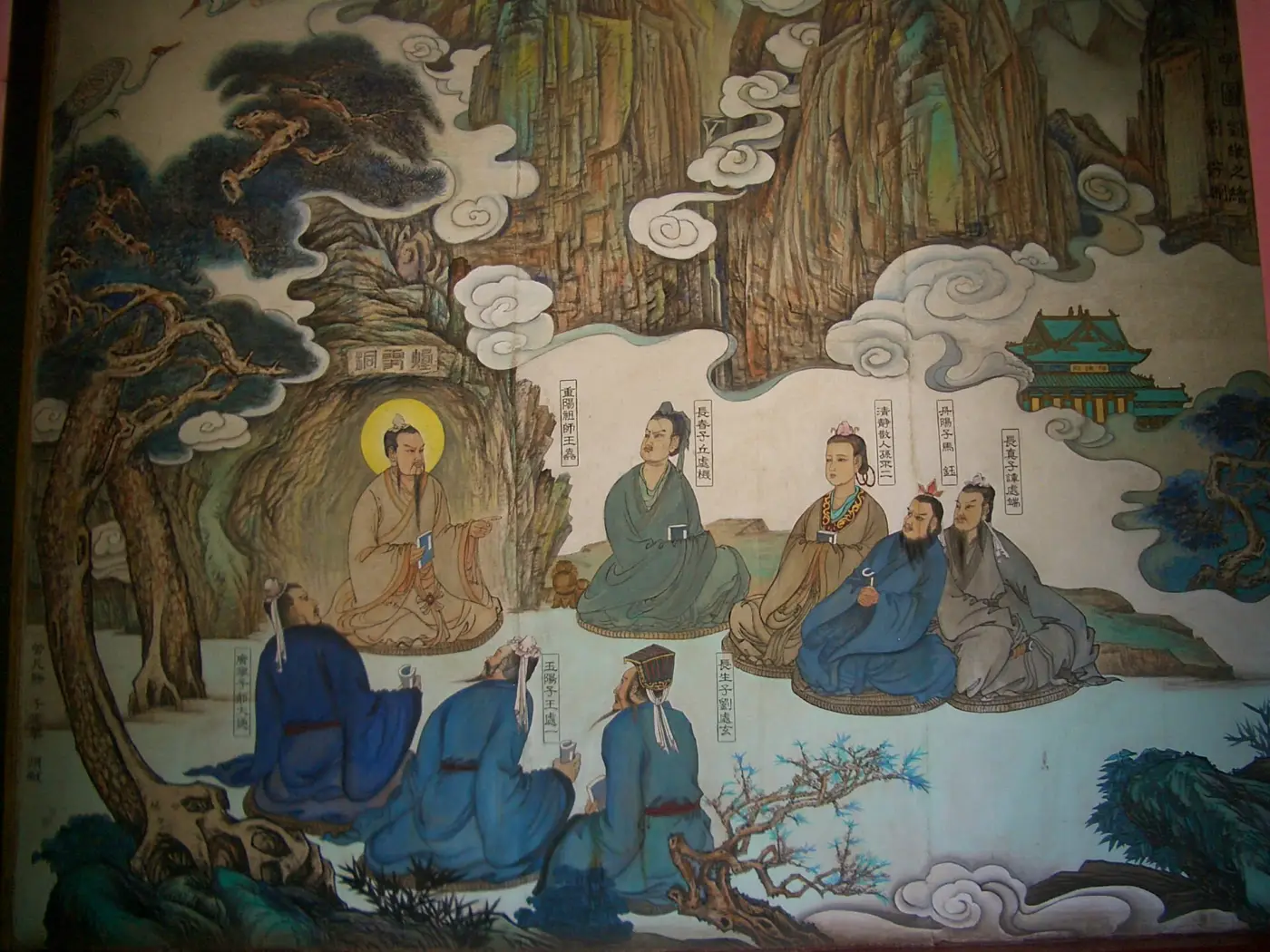
Wang Chongyang, originally named Wang Zhongfu and later Wang Zhe, was born in 1113 and died in 1170. He came from Daweicun near Xianyang in Shaanxi and founded the Quanzhen (Complete Perfection) school. Trained early in letters and martial skills, he turned to Taoist practice in mid-life. Tradition says he met extraordinary teachers at Ganhe. He later taught in Shandong, where his seven chief disciples, Ma Yu, Tan Chuduan, Liu Chuxuan, Qiu Chuji, Wang Chuyi, Hao Datong and Sun Bu'er, became known as the Seven Masters of Quanzhen. He promoted the harmony of the Three Teachings and the cultivation of mind and nature, using the Tao Te Ching, the Classic of Filial Piety and the Heart Sutra in teaching, and he established Quanzhen's tradition of monastic practice.
References
- Qing Xitai, ed., Zhongguo daojiao shi (History of Chinese Taoism), Sichuan People's Publishing House.
- Livia Kohn, ed., Daoism Handbook (Leiden: Brill, 2000).
- Sima Qian, Shiji (Records of the Grand Historian), including the biography of Laozi and Han Fei.