Origins of Taoist Medicine
Traditional Chinese medicine and Taoism have a long history of contact. Taoism valued nourishing life and the pursuit of longevity, and some Taoists were also skilled in medicine, treating people and leaving written works. Ge Hong of the Eastern Jin, author of the Baopuzi, also compiled the Zhouhou beiji fang (Emergency Formulas to Keep Behind the Elbow), a collection of simple remedies for urgent situations that later generations expanded.
Tao Hongjing of the Southern Dynasties, a leading figure of Maoshan Taoism, edited and annotated the Shennong bencao jing in his Bencao jing jizhu, which strongly influenced later materia medica. Sun Simiao of the Tang, author of the Beiji qianjin yaofang, is revered in folk tradition as the 'King of Medicine'. He is often associated with Taoism, but his thought drew on Confucian, Buddhist and Taoist sources and should not be simply assigned to one school.
Materia Medica Culture
'Bencao' (literally 'roots and herbs') refers to the traditional study of medicinal substances, named for the predominance of plants. From the Shennong bencao jing, attributed to the legendary Shennong, through Tao Hongjing's Bencao jing jizhu to Li Shizhen's Ming-dynasty Bencao gangmu, the literature builds a clear line of accumulated knowledge.
'Daodi yaocai' (authentic-origin materials) is an important traditional concept: materials from particular regions whose quality has long been recognized, reflecting how people observed the link between land and produce. It is a cultural and experiential idea; this site does not describe the effects or use of any substance.
Daoyin Exercises
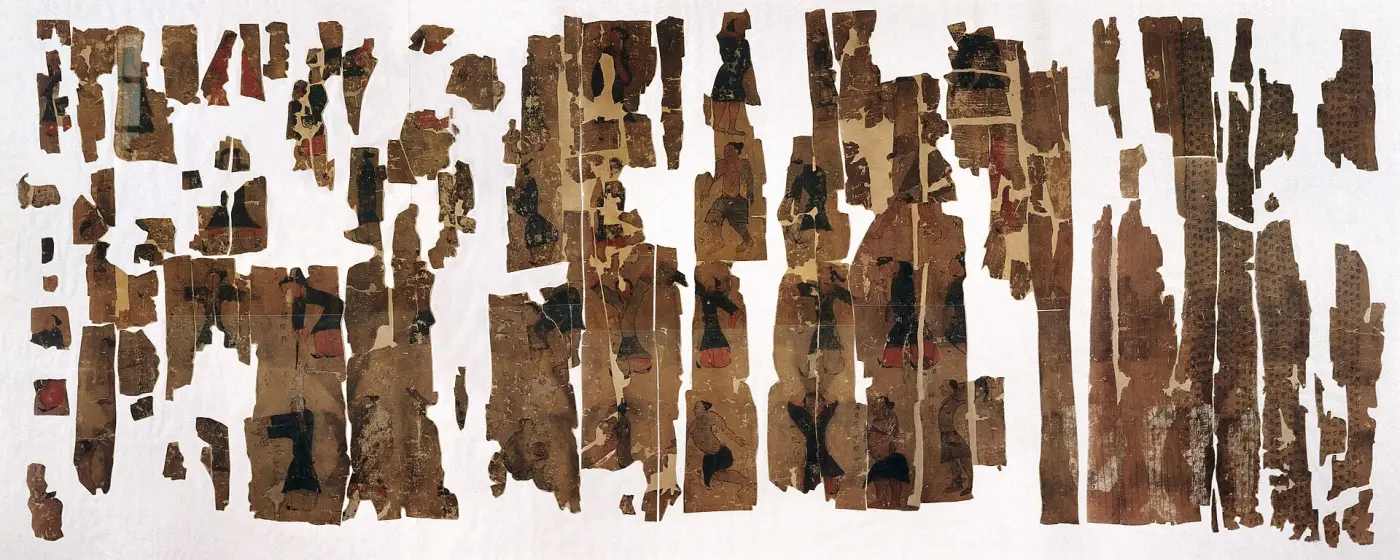
'Daoyin' refers to stretching movements coordinated with breathing, an important part of ancient Chinese cultivation culture. The silk painting Daoyin tu, unearthed in 1973 from a Han tomb at Mawangdui, Changsha, depicts many human postures and is among the earliest surviving images of its kind. The tomb dates to the early Western Han.
Among later practices, Wuqinxi (Five Animals Play) is traditionally attributed to the physician Hua Tuo of the Eastern Han and imitates the tiger, deer, bear, ape and bird. Baduanjin (Eight Pieces of Brocade) is recorded in Song-dynasty texts and exists in several versions. Yijinjing is attributed to Bodhidharma, though extant texts are generally thought to date from the Ming and Qing. Such attributions rest on tradition and are often debated by scholars; approach these practices as cultural heritage and within your own limits.
Living with the Seasons
Living in accord with the four seasons is a central idea of traditional Chinese views of well-being. The chapter 'Si qi tiao shen da lun' in the Huangdi neijing: Suwen says that people should adjust their routines and moods to spring, summer, autumn and winter; spring, for instance, is described as the season of 'fa chen', when all things sprout.
The idea grew from careful observation of natural rhythms and resonates with the Taoist notion of the unity of heaven and humanity. It is best understood as a cultural attitude of living alongside nature rather than as a guarantee of any health outcome.
Cultivating the Mind
Taoist thought stresses inner stillness and calm. The Laozi urges one to 'attain utmost emptiness and hold fast to tranquility' and to lessen excessive desire. In the 'Dazongshi' chapter of the Zhuangzi, Yan Hui describes 'sitting and forgetting' (zuowang): letting go of body and knowledge to merge with the Great Thoroughfare.
'Shouyi' (guarding the One) is a key term in Taoist cultivation, discussed in the 'Zai you' chapter of the Zhuangzi and in Ge Hong's Baopuzi, and broadly means keeping the spirit concentrated and undisturbed by outside things. These are philosophical reflections, offered here as a window onto Chinese thought.
Separating Fact from Myth
In history, the practice of 'external alchemy' sought to refine elixirs from minerals, often including toxic substances such as mercury, lead and arsenic. Chinese histories record that several Tang emperors, such as Xianzong and Wuzong, were associated with taking elixirs, and traditional accounts attribute irritability and even death to poisoning. It stands as a cautionary lesson, and Taoism itself later shifted toward 'internal alchemy' as its main practice.
Today, products marketed under a 'Taoist wellness' label vary widely in quality, and some exaggerate claims or promise cures for everything. Treat such advertising critically, do not follow it blindly, and follow modern medical guidance on health matters. Nothing on this site is medical advice.
References
- Qing Xitai, ed., Zhongguo daojiao shi (History of Chinese Taoism), Sichuan People's Publishing House.
- Livia Kohn, ed., Daoism Handbook, Leiden: Brill, 2000.
- Kristofer Schipper, The Taoist Body, Berkeley: University of California Press, 1993.
- Huangdi neijing: Suwen; Ge Hong, Baopuzi; Zhuangzi.