Origins
Taoism has no single source. Pre-Qin Taoist philosophy supplied the core idea of the Tao; Huang-Lao learning in the Warring States and Han applied it to government and self-cultivation; the fangshi of the eastern coast added the quest for longevity and immortality; and in the Eastern Han the Way of the Five Pecks of Rice and the Way of Great Peace first organized these ideas into a religion with scriptures, communities, and rituals.
For this reason scholars generally date the formation of Taoism as a religion to the second century CE, while Laozi is honored as its founding figure and the Tao Te Ching as its fundamental scripture.
Pre-Qin Taoist thought
The Tao Te Ching and the Zhuangzi present the Tao as the source of all things and value naturalness, non-action, and stillness. They became the philosophical foundation of Taoist teaching.
Huang-Lao learning
A school of the Warring States and early Han, named after the Yellow Emperor and Laozi, that applied Taoist ideas to statecraft and health. The early Han court was known for governing through non-action.
Fangxian Dao
Masters of techniques along the eastern coast sought longevity and immortality. According to the Shiji, the First Emperor of Qin sent Xu Fu to sea in search of an elixir, and Emperor Wu of Han also pursued immortality.
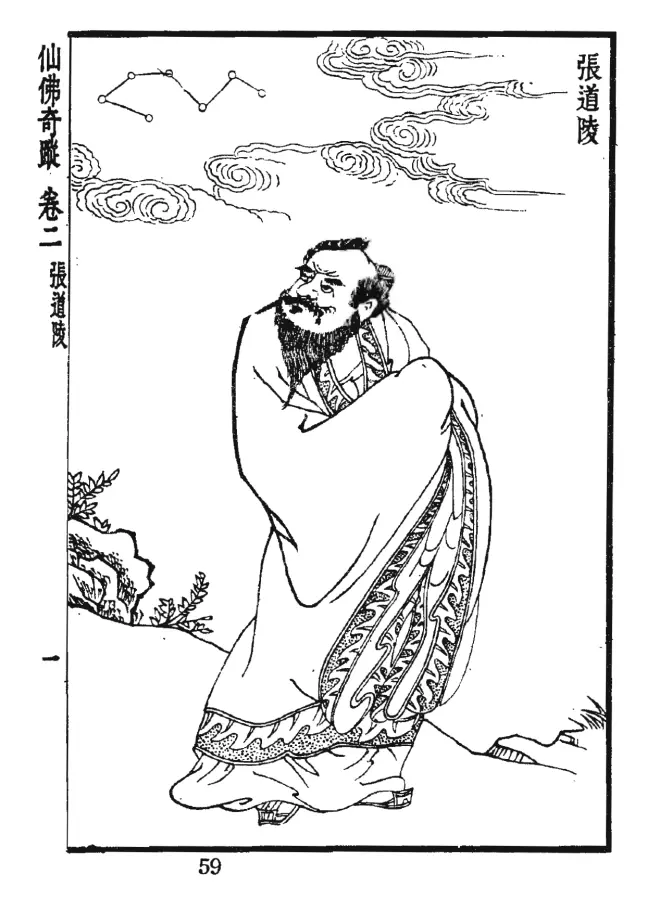
Five Pecks of Rice
Traditionally said to have been founded by Zhang Ling (Zhang Daoling) on Mount Heming in Sichuan, it took its name from the five pecks of rice paid by members. It revered Laozi as Lord Lao and grew into the Celestial Masters tradition, a key milestone in the birth of Taoism.
Through the Dynasties
Taoism's standing rose and fell from dynasty to dynasty: at times it was honored by emperors who sponsored editions of the Taoist Canon, at other times it lived mainly among ordinary people and their customs. This history explains where today's schools and temples come from.
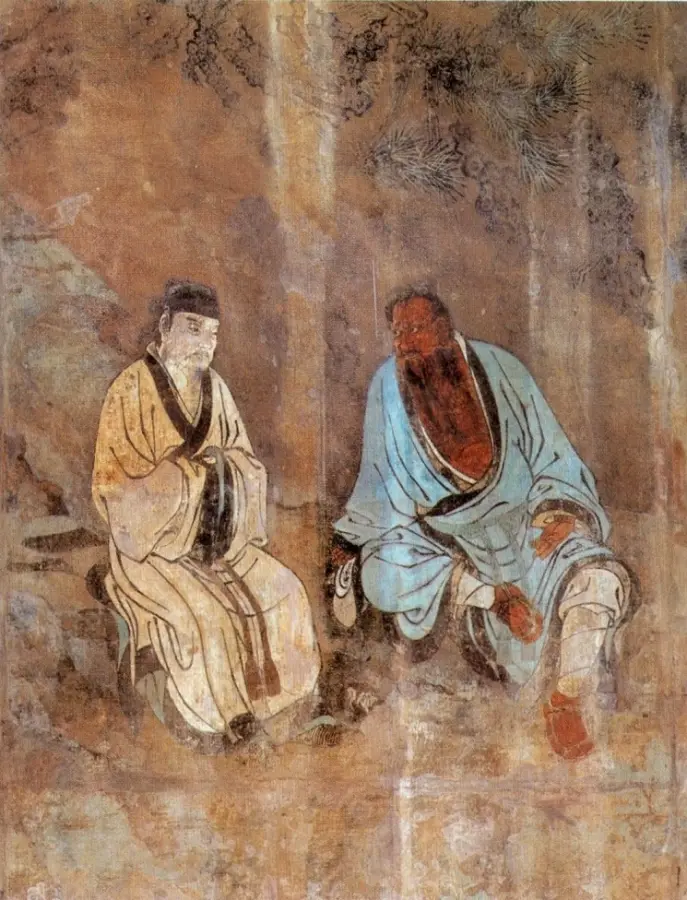
Han & Wei
At the end of the Eastern Han, the Five Pecks of Rice and the Way of Great Peace arose, producing early scriptures such as the Taiping Jing and the Xiang'er commentary on Laozi. Zhang Lu ruled Hanzhong as a religious state before submitting to Cao Cao, which carried the Celestial Masters tradition north.
Jin & Northern-Southern Dynasties
Ge Hong's Baopuzi set out a systematic theory of immortality; the Shangqing and Lingbao scriptures appeared; Lu Xiujing organized the scriptures and liturgy, Kou Qianzhi reformed the northern Celestial Masters, and Tao Hongjing edited the Shangqing texts on Mount Mao.
Sui & Tang
The Tang imperial family, surnamed Li, claimed Laozi as its ancestor, giving Taoism great prestige. Emperor Xuanzong wrote his own commentary on the Tao Te Ching and sponsored a Taoist Canon. Elixir-taking was widespread, and the histories record several emperors poisoned by elixirs.
Song & Yuan
Emperor Huizong of Song patronized Taoism and had the Zhenghe Taoist Canon compiled, while inner alchemy flourished. Under the Jin, Wang Chongyang founded Quanzhen; his disciple Qiu Chuji traveled west to meet Genghis Khan, and Quanzhen thrived under the Yuan. In the south, the talismanic lineages gradually gathered under the Celestial Masters of Mount Longhu.
Ming & Qing
The pattern of two main schools, Zhengyi and Quanzhen, became fixed. The Yongle Emperor rebuilt the temples of Mount Wudang, and the Ming produced the Zhengtong Taoist Canon (1445) and its Wanli supplement (1607). In the early Qing, Wang Changyue revived the Longmen lineage at the White Cloud Temple in Beijing, and Taoism became ever more woven into everyday life.
Schools & Lineages
Taoism has never been monolithic. After the Yuan dynasty most lineages fell into two broad systems: Zhengyi, which emphasizes talismans and liturgy and whose priests may live at home with families, and Quanzhen, which emphasizes inner alchemy and whose monks and nuns live in monasteries. Branches such as Longmen, Maoshan, Lingbao, and Qingwei each have their own origins and character.
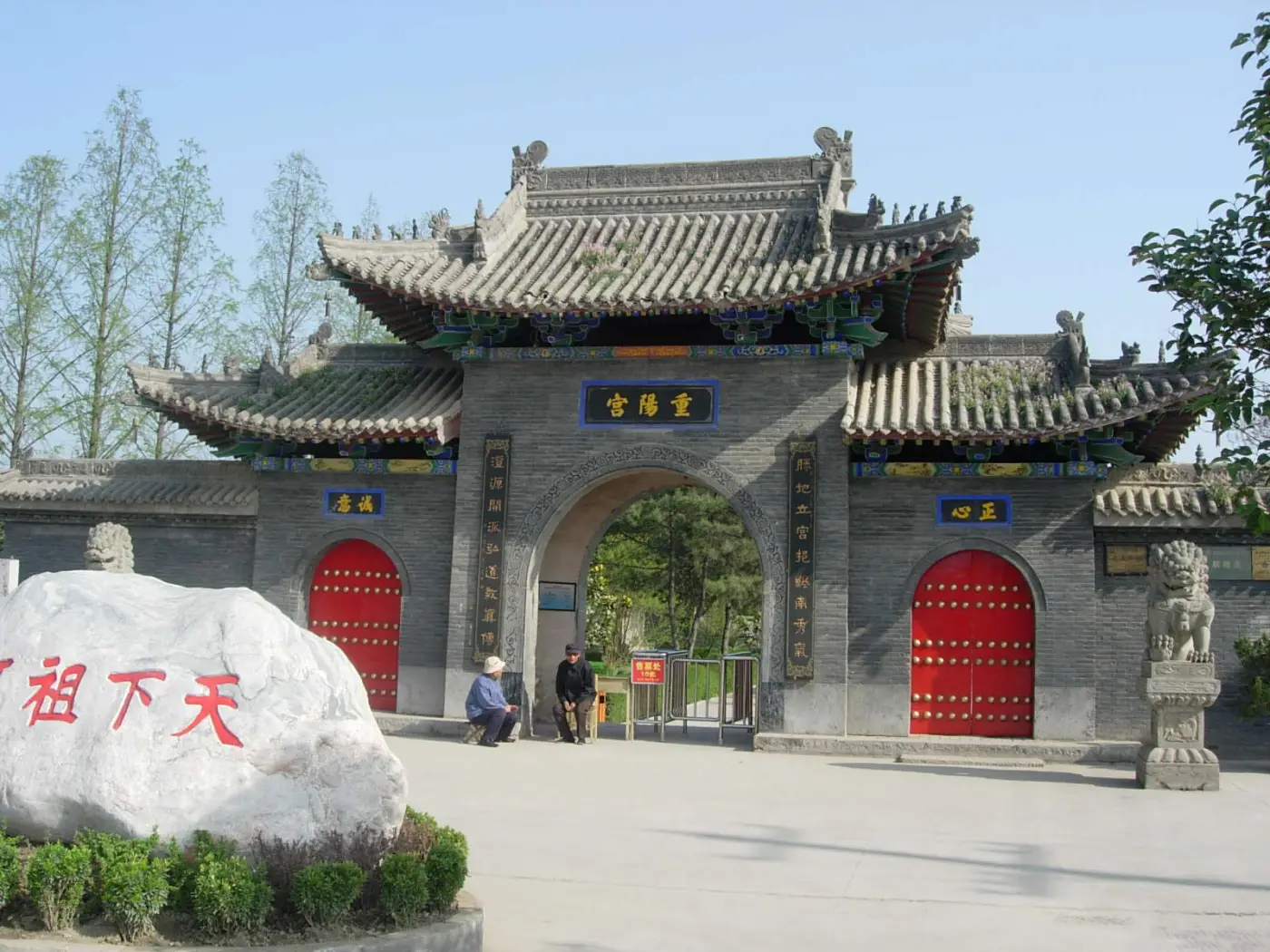
Zhengyi
Descended from Zhang Ling's Celestial Masters, with its ancestral seat on Mount Longhu in Jiangxi and a line of hereditary Celestial Masters. It emphasizes talismans and ritual, and most of its priests may live at home.
Quanzhen
Founded by Wang Chongyang under the Jin dynasty, it teaches the harmony of the Three Teachings and the dual cultivation of inner nature and life, with a focus on inner alchemy. Its clergy live in monasteries under strict precepts.
Longmen
The most widespread branch of Quanzhen, honoring Qiu Chuji as its patriarch. Wang Changyue's public ordinations at the White Cloud Temple in the early Qing revived it, and it continues today.
Maoshan
Centered on Mount Mao in Jurong, Jiangsu, it transmits the Shangqing scriptures. Tao Hongjing's work there in the Southern Dynasties established its standing; it flourished in the Tang and later merged into Zhengyi.
Lingbao
Built around the Lingbao scriptures, it emphasizes liturgy and the salvation of all beings. Centered on Mount Gezao in Jiangxi, it later merged into Zhengyi.
Qingwei
A talismanic lineage that arose around the Song-Yuan transition, known for its thunder rites. It spread in southern China under the Yuan and later also merged into Zhengyi.
References
- Qing Xitai, ed., Zhongguo Daojiao shi (History of Chinese Taoism), Sichuan People's Publishing House
- Livia Kohn, ed., Daoism Handbook (Brill, 2000)
- Kristofer Schipper and Franciscus Verellen, eds., The Taoist Canon: A Historical Companion to the Daozang (University of Chicago Press, 2004)
- State Council Information Office, China's Policies and Practices on Protecting Freedom of Religious Belief (white paper, 2018)