Taoist Music
Music is an essential part of Taoist ritual, including chanted scripture melodies, instrumental pieces and hymns, marked by slow melodies and a serene mood. Items such as Wudang Taoist music appear on China's national intangible cultural heritage list, reflecting a living tradition.
The folk musician Hua Yanjun, known as Abing, grew up in a Taoist temple in Wuxi and learned Taoist music there. He later composed the erhu piece Erquan yingyue (Moon Reflected on the Second Spring), now a classic of modern Chinese music and a sign of the link between temple music and folk art.
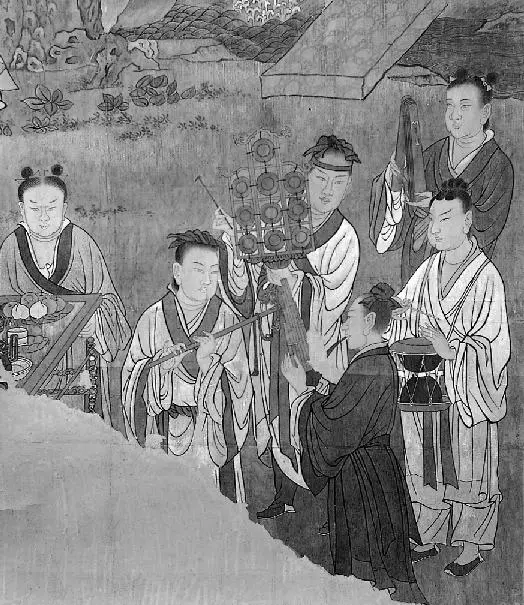
Painting and Calligraphy
Taoist themes have long appeared in Chinese painting and calligraphy, including immortals, landscapes, star lore and temples. The mural Chaoyuan tu (Homage to the Origin) in the Hall of the Three Pure Ones at Yongle Palace, Shanxi, shows a grand procession of deities in flowing line and is a hallmark of Yuan-dynasty mural painting.
In calligraphy, Wang Xizhi of the Eastern Jin is linked with Taoist culture. Tradition says he copied the Huangting jing in exchange for a Taoist's white geese, the famous 'goose-exchange' story; accounts differ, and some name the Tao Te Ching instead, so it should be read as a traditional anecdote.
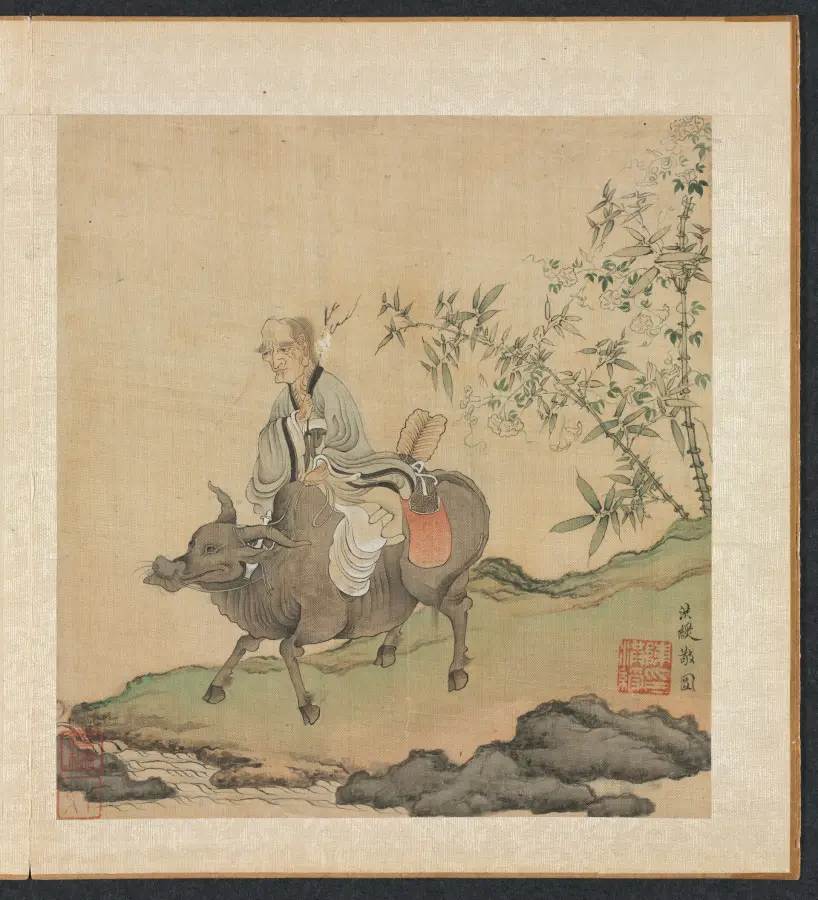
Taoist Martial Arts
Wudang martial arts are a system of boxing and weapon forms centered on Mount Wudang, stressing softness overcoming hardness and the cultivation of both inner and outer. They were inscribed in 2006 in the first batch of China's national intangible cultural heritage, and are closely tied to Taoist ideas of cultivation.
Taijiquan is a traditional Chinese martial art; in 2020 it was inscribed on UNESCO's Representative List of the Intangible Cultural Heritage of Humanity. Legend credits the Wudang Taoist Zhang Sanfeng with creating it, but this is a legend. Scholars still discuss its origins, and it is generally thought to have taken shape around Chenjiagou in the late Ming and early Qing.
Festivals and Folk Customs
Taoism speaks of the Three Primes: the Upper Prime (15th day of the first lunar month), Middle Prime (15th of the seventh month) and Lower Prime (15th of the tenth month), associated with the Officials of Heaven, Earth and Water. The Upper Prime is the Lantern Festival, whose lantern viewing and riddle guessing remain popular today.
Taoist elements also run through folk custom. Temple fairs combine market and festival around a temple; door gods such as Shentu and Yulei (later also Qin Qiong and Yuchi Gong) guard the home; and the Kitchen God is traditionally sent off to report to Heaven in the last lunar month. These customs are part of shared Chinese cultural memory.
Crafts and Cultural Heritage
Crafts connected with Taoist culture are many: woodcarving and stonework for temples, murals and painted decoration, ritual implements and incense vessels, embroidered Taoist robes, and the immortal and auspicious imagery found in folk art such as New Year prints and paper cutting. Many are covered by intangible heritage programs at various levels.
Today's cultural-creative products also draw on Taoist imagery and ideas, such as the taiji diagram, cranes and cloud patterns. When enjoying such items, it is worth paying attention to their cultural background and the craft itself, and treating them with respect.
References
- Qing Xitai, ed., Zhongguo daojiao shi (History of Chinese Taoism), Sichuan People's Publishing House.
- Livia Kohn, ed., Daoism Handbook, Leiden: Brill, 2000.
- UNESCO Representative List of the Intangible Cultural Heritage of Humanity: Taijiquan (2020).